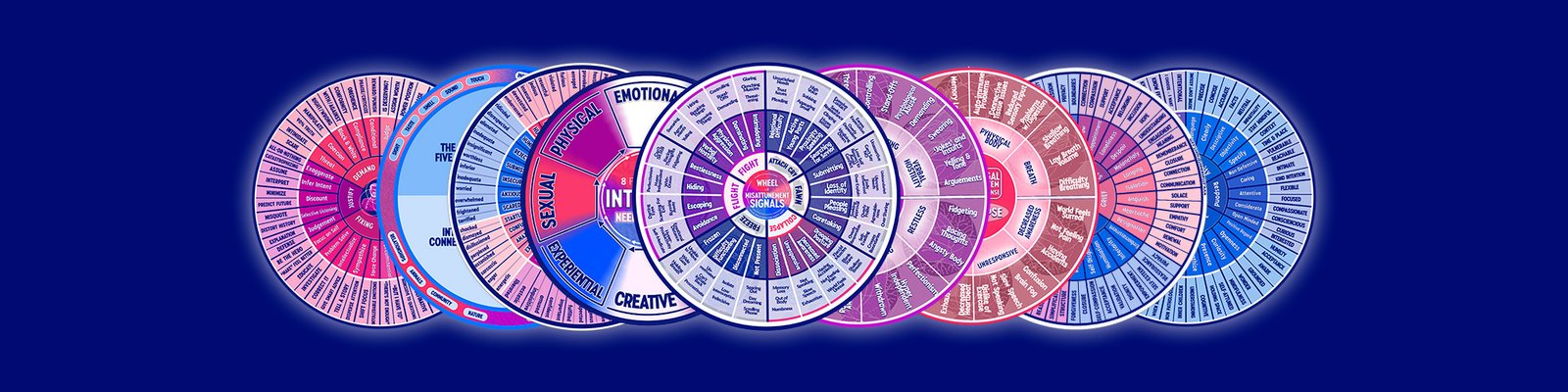
The Foundation of Self

Attunement in the developing Human system

An Introduction to The Attuned Life: A Framework for Connection and Healing

Our well-being isn’t just about what happens inside us; it’s a dynamic, moment-to-moment dance between our internal state and the world around us. At the heart of this dance is the concept of attunement—the profound, often non-verbal experience of feeling seen, heard, and understood. Its opposite, misattunement, is the equally powerful feeling of being disconnected, misunderstood, or alone, even in the presence of others.

This framework expands on these core concepts by mapping them across a series of six interconnected domains. It’s a lens for understanding how attunement and misattunement shape our nervous systems, our relationships, and our place in the world, from the deepest biological level to the broadest cultural currents.

By exploring these domains, we gain a comprehensive map for navigating our own internal landscapes and for building a more connected world for our children and ourselves. This is not just a theory; it’s a guide to the lived experience of connection.

The Individual System

This is the foundation of everything. It is our internal world—our body, our brain, and our inner psychological landscape. Our capacity for external connection is a direct reflection of our internal state.

  • As an Adult: This domain is our ability to be self-attuned. This manifests as a regulated nervous system, a felt sense of safety within our own body, and a coherent inner world where our thoughts and emotions are in dialogue, not conflict. Misattunement at this level feels like chronic tension, a racing mind, and a deep-seated disconnect from our feelings and physical sensations.
  • As a Developing Child: The journey of a child is the journey of building this system. In infancy, attunement is a caregiver's soothing touch that co-regulates a baby's nervous system. As a child grows, this external co-regulation becomes internalized, forming the blueprint for their own capacity for self-regulation and self-worth. Misattunement in this phase can lay a foundation of a hyper-reactive nervous system and an inner world built on

The Microsystem

This is our immediate world of direct, face-to-face interactions. It includes our partners, children, closest friends, and colleagues.

  • As an Adult: Attunement in this domain feels like being truly "gotten." It is the warm embrace of a partner after a hard day, the active listening of a friend, and the supportive presence of a colleague. Misattunement here is the pain of feeling invisible, having your feelings dismissed, or experiencing a constant state of interpersonal conflict that activates your nervous system.
  • As a Developing Child: This is the primary training ground for all relationships. Attuned moments with a parent—eye contact, mirroring, and validation—teach a child how to trust and form secure attachments. Misattuned moments—dismissiveness, neglect, or emotional inconsistency—create a blueprint for insecure attachment and a feeling that love is conditional or unsafe.

The Mesosystem

This domain is the network of connections between our different microsystems. It is the bridge between our home and school life, or our family and our friend groups.

  • As an Adult: Attunement in this domain feels like harmony. Your sense of self is consistent across different environments. Your family and friends get along, and your personal values are in alignment with your professional ones. Misattunement here is the stress of being pulled in different directions, the internal fragmentation of "code-switching," or the constant effort of managing conflicts between the important people in your life.
  • As a Developing Child: This system provides a vital sense of stability. Attunement is a parent and teacher working together to support a child. Misattunement is a child caught in the middle of divorced parents' conflict, forced to navigate two entirely different sets of rules and emotional realities, which can create profound stress and confusion.

The Exosystem

This is the domain of indirect influence—the social and institutional structures that shape our lives even though we don't directly participate in them. It includes our employer's policies, community resources, and the local school board.

  • As an Adult: Attunement in this domain is the invisible safety net. It's having an employer with a generous leave policy that allows you to care for a sick family member, or living in a community with excellent, accessible public spaces. Misattunement is a punitive work culture, a lack of community resources, or a dysfunctional system that leaves you feeling powerless and unsupported.
  • As a Developing Child: This domain indirectly but powerfully impacts a child's well-being. Attunement is a parent's low-stress workplace that allows them to be more present at home. Misattunement is the chronic stress of a parent's job loss or the lack of community support, which inevitably trickles down and creates instability and dysregulation in the microsystem.

The Macrosystem

This is the broadest and most pervasive layer—our culture, our laws, our economic systems, and the collective narratives we live by.

  • As an Adult: Attunement in this domain feels like collective care. It's living in a culture that values empathy, prioritizes mental health, and has social policies that support human dignity. Misattunement is the insidious shame of a culture that values a "hustle mentality" and emotional repression, or the systemic stress of political and social instability that we all carry.
  • As a Developing Child: A child's journey is profoundly shaped by the Macrosystem. Attunement is a culture that affirms their identity and allows them to feel a sense of belonging in the wider world. Misattunement is the experience of growing up in a world where your identity is stigmatized, or where cultural narratives of shame and perfection make it difficult to develop a healthy sense of self.

The Chronosystem

This domain refers to the element of time—how life events, major transitions, and historical moments (both personal and societal) impact our lives and our sense of connection.

  • As an Adult: Attunement in this domain is the capacity for adaptation and resilience. It is an individual's ability to gracefully navigate a major life change, such as a career shift, marriage, or the loss of a loved one. It is also the ability to integrate past painful experiences into a coherent life story without being defined by them. Misattunement here is feeling stuck in the past, unable to cope with transitions, or being overwhelmed by the unpredictable changes of life.
  • As a Developing Child: This domain is profoundly impactful for a child's sense of stability. Attunement is a family that provides consistent support and open communication during a major transition, like a divorce or a move. It is a family or community that helps a child process a major socio-historical event in an age-appropriate and emotionally supportive way. Misattunement is a sudden, chaotic change that is not explained or processed, leaving the child’s brain to fill in the gaps with fear and insecurity.