
THE PROBLEM
CHRONIC Misattunement is a Foundational Threat to Humans
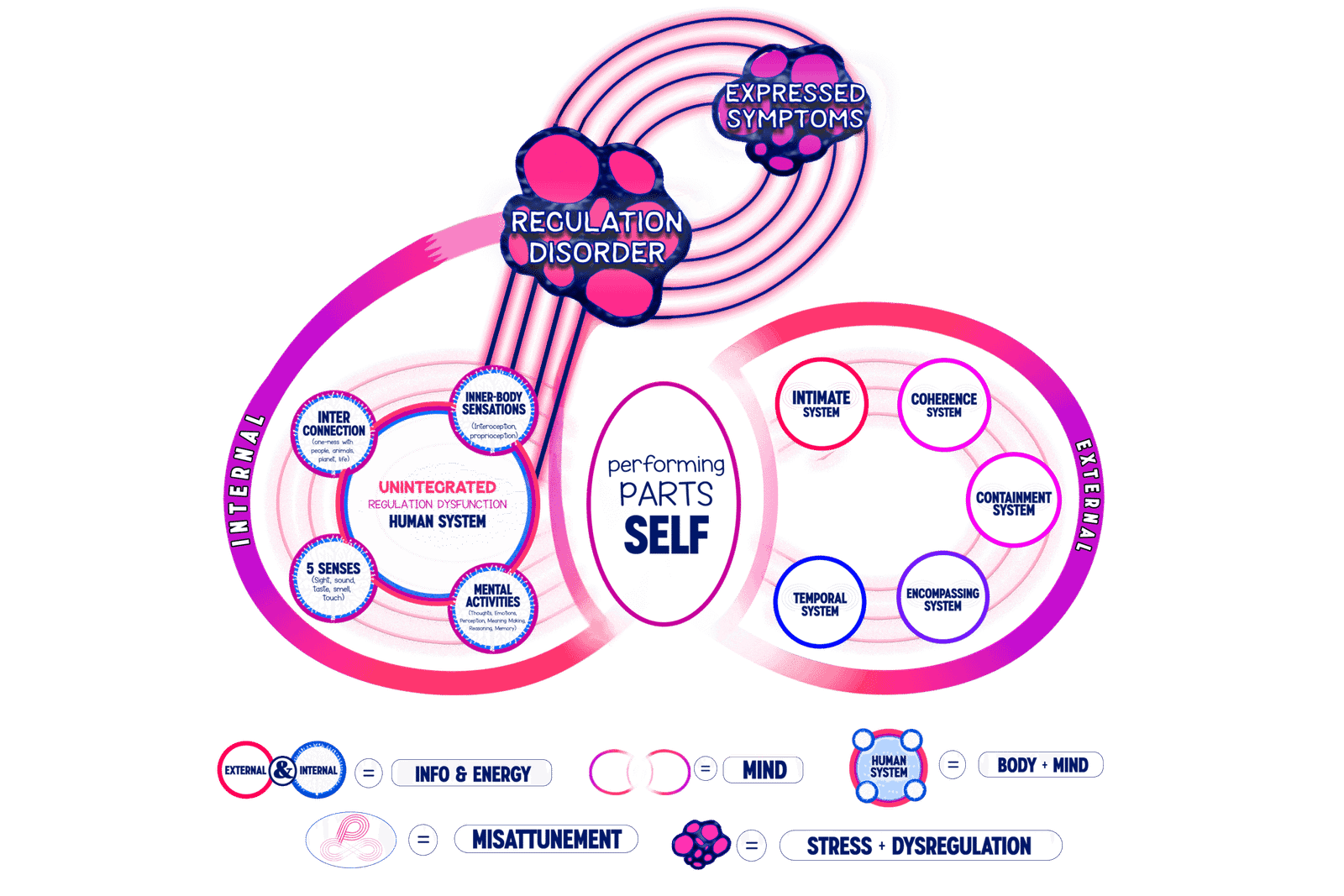
Cook-Cottone, C. P. (2006). The attuned representation model for the primary prevention of eating disorders: An overview for school psychologists. Psychology In The Schools, 43(2), 223-230.
Cook-Cottone, C. P. (2015). Mindfulness and yoga for self-regulation: A primer for mental health professionals. New York, NY York: Springer.
Cook-Cottone, C. P., (2017). Mindfulness and yoga in schools for teachers and practitioners. New York, NY: Springer.
Chronic misattunement is not merely a contributing factor to poor health; it’s a fundamental deficit that undermines the very foundations of well-being, leadership and intelligence.
We need a rapid and effective effort to develop people’s capacity and skills in relating, attunement, caring and embodiment. Not an overnight process, but absolutely necessary if we’re intent on creating future(s) that are beautiful, where we can share power and exist in a zone of ventral vagal goodness.
When we’re not attuned, we’re set up to fail, and we’re definitely more easily tricked, coerced, manipulated, controlled and harmed. There are a lot of understandable reasons people aren’t attuned, to themselves or others, and we don’t have to accept a base existence. One where we’re even likely to harm others, when that is definitely not our intention. There has never been an external environment demanding attuned leaders more than the current moment in America. We can create change, starting by leading ourselves and benefiting from the huge strides scientists, helping professionals and researchers have made in understanding and educating us on human potential & healing.
Time to demystify how human beings, our bodies, and our minds work and agree to move forward on some fundamental TRUTHS
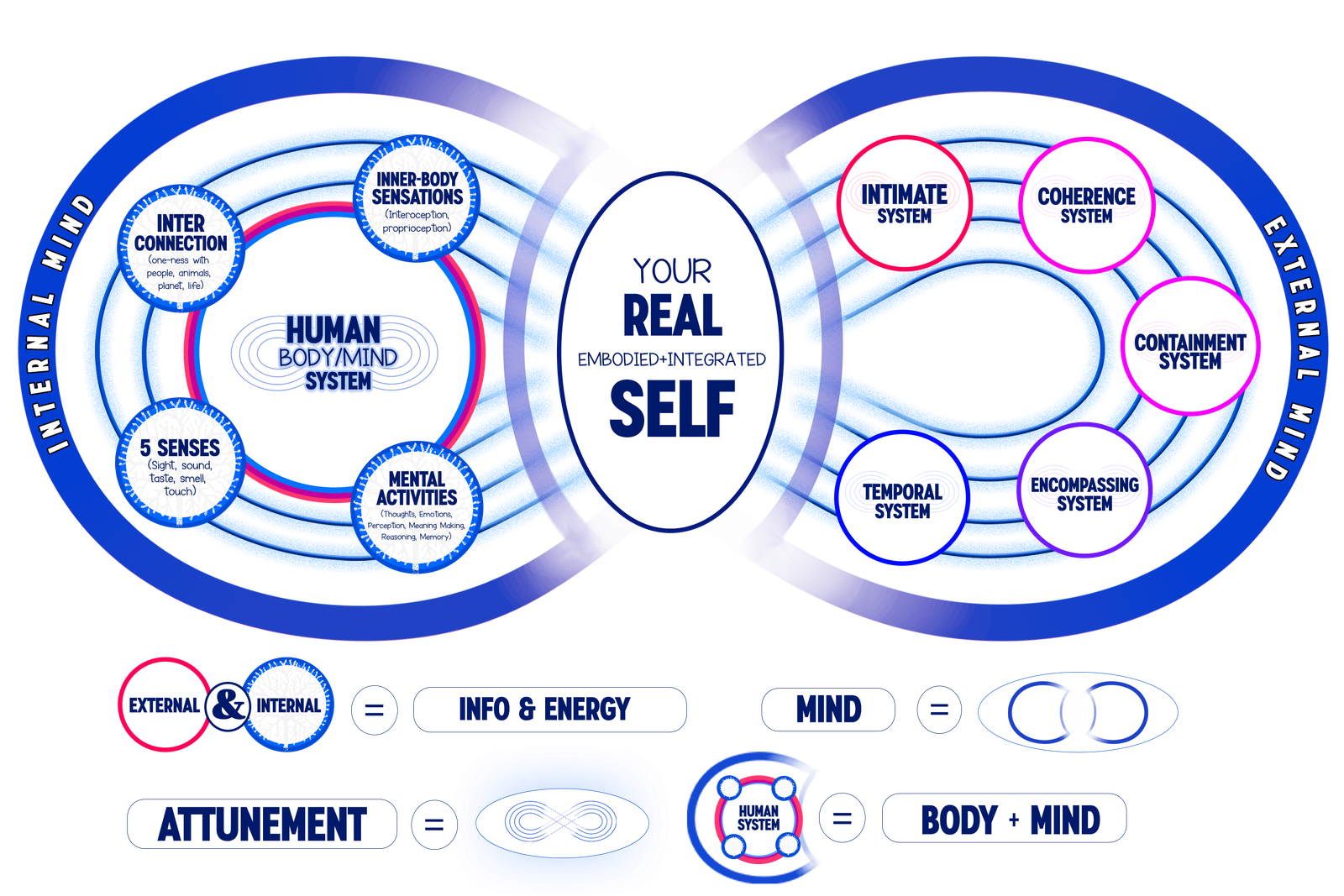
EXPLAINING THE DIAGRAM
HOW IT SHOWS UP IN INTIMACY

Misattunement, particularly within the context of rigid societal expectations for Roles (femininity, masculinity, gender) contributes significantly to the rise of eating disorders, body image issues, body dysmorphia, and the use of AI to alter self-image.
Here’s a breakdown of those connections:
1. Misattunement and the Foundations of Self-Worth:
Emotional Neglect: When a child’s emotional needs are consistently unmet or misunderstood (misattunement), it can leave them feeling deeply insecure and unworthy.
-
Shame and Invalidation: Children who experience emotional neglect may internalize shame and believe that their true selves are flawed or unacceptable. This can lead to a negative body image and self-concept.
-
Searching for External Validation: In the absence of consistent emotional attunement, individuals may seek external validation to fill the void. This can manifest in a preoccupation with physical appearance and a drive to conform to societal beauty standards.
2. Societal Pressures on “Femininity”:
Unrealistic Beauty Standards: W.E.I.R.D. societies, influenced by media and culture, often present a narrow and often unattainable ideal of female beauty. This ideal emphasizes thinness, youthfulness, and specific physical attributes.
-
Internalization of the “Thin Ideal”: Women and girls are bombarded with messages that equate thinness with beauty and success, leading to the internalization of this ideal.
-
Pressure to Conform: This pressure to conform to unrealistic beauty standards creates immense anxiety and body dissatisfaction among women.
3. The Role of the “Disordered Representational Self”:
Sacrificing Authenticity: To meet societal expectations and gain acceptance, women may abandon their authentic selves and create a “disordered representational self” based on how they believe they “should” appear. This involves suppressing real emotions and feelings to present a facade of conformity.
-
Loss of the Embodied Self: This disconnection from the authentic self can lead to a “loss of the embodied self,” where individuals are out of touch with their physical sensations, needs, and emotions. This can contribute to body dysmorphia and a distorted perception of one’s own body.
4. AI and the Amplification of the Crisis:
Exacerbating Body Dissatisfaction: AI-powered filters and editing tools allow users to easily alter their images to conform to unrealistic beauty standards. This further intensifies body dissatisfaction and can contribute to the development of body dysmorphia and eating disorders.
-
Reinforcing Harmful Stereotypes: AI algorithms can perpetuate existing biases and stereotypes about what is considered attractive, further narrowing the definition of beauty and making it more challenging for women to feel accepted for who they are.
-
Promoting a “Disordered Representational Self”: The prevalence of heavily filtered and edited images online reinforces the idea that it’s necessary to present a false image of oneself to the world. This can further blur the lines between reality and fantasy, making it harder to cultivate a healthy self-image and engage in authentic relationships.
Misattunement lays the groundwork for emotional insecurity and a life-long search for external validation and regulation.
It causes your developing complex system of a self to strengthen adaptations, that while essential for young survival, are quite harmful and limiting for adulthood. The cultivation of Role Selves rather than a coherent Real Self creates a disconnection from an internal sense of safety, diminished self-regulation capacity, boundaries, identity and intelligence.
Societies that impose rigid beauty standards, especially on women, exacerbate this vulnerability by promoting the internalization of unrealistic ideals.
This can lead to the creation of a “disordered role self,” where authenticity is sacrificed for the sake of conformity, reward or avoidance of negative consequences. The widespread use of AI filters and editing tools is fueling this crisis by making it easier to create and share highly altered images, reinforcing the pressure to conform and diminishing the ability to attune to and accept one’s true self.
AI is making things even more difficult, here’s how:
-
Disconnection from the “Real Self”: AI-powered interactions can foster a reliance on simulated empathy and emotional support that lacks genuine human connection. This can lead individuals to become detached from their authentic selves, making it harder to attune to their own needs and the needs of others.
-
The Development of a “Disordered Representational Self”: The emphasis on external validation and performance within some AI systems can lead to a “disordered representational self.” This means prioritizing how one is perceived by the AI and others over authentic feelings and needs.
-
Perpetuating Misattunement: By interacting primarily with AI systems designed to provide seamless and conflict-free interactions, individuals may develop unrealistic expectations of human relationships. This can reduce their patience and ability to navigate the complexities of human emotions, leading to decreased empathy and emotional attunement.
Here’s how this happens:
-
Simulated Empathy: AI can be programmed to mimic empathy, but it lacks the genuine understanding and context that comes from human emotional depth and shared experiences. Relying on this artificial empathy can hinder the development of authentic empathy and leave individuals feeling unheard or invalidated.
-
The “Filter Bubble”: AI algorithms can create “filter bubbles” that limit exposure to diverse perspectives and reinforce existing beliefs, potentially hindering open-mindedness and empathy.
-
Erosion of Face-to-Face Interaction: As AI-powered systems automate tasks and facilitate virtual interactions, opportunities for genuine face-to-face contact can diminish. This can lead to a decline in emotional intelligence and a weakening of social bonds.
-
Shift in Social Expectations: AI systems, often designed as “givers” that constantly fulfill user needs, can lead individuals to expect similar interactions in human relationships. This can lead to frustration and disappointment when real-world interactions require compromise and emotional effort.
So while AI can be helpful, its reliance on simulated empathy, its potential to create filter bubbles, and its impact on human relating patterns can inadvertently contribute to the crisis of misattunement by fostering a disconnection from authentic selves and diminishing empathy.